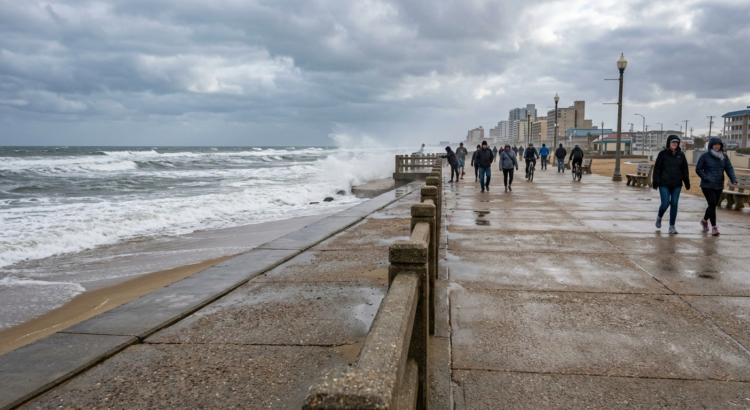
Virginia Beach offers a picturesque coastal lifestyle, but for homeowners, the local climate presents a relentless gauntlet of environmental challenges. From the salt-laden mist of the Atlantic to the sweltering humidity of a Mid-Atlantic summer, outdoor surfaces are constantly under siege.
In this volatile environment, the choice of paving material is not just an aesthetic decision; it is a matter of structural survival. Concrete paving has emerged as the premier choice for local driveways, patios, and walkways because of its inherent ability to withstand the “Triple Threat” of coastal living: salt corrosion, moisture-driven shifting, and intense UV radiation.
Unlike asphalt, which can soften in the Tidewater heat, or wood, which rots in the coastal dampness, concrete provides a rigid, high-performance foundation. By understanding the science of how concrete interacts with the Virginia Beach elements, property owners can invest in outdoor spaces that remain functional, safe, and visually stunning for decades.
Resisting the Corrosive Effects of Salt Air
Living near the ocean means that salt is a constant presence in the air, which can be highly corrosive to many building materials. High-quality concrete paving utilizes dense mix designs that act as a barrier against the “spalling” or flaking often caused by salt crystallization.
- Lower Permeability: Modern concrete mixes are engineered to be less porous, preventing salt-laden moisture from deep-penetrating the slab.
- Non-Reactive Aggregates: Using high-quality local stone ensures that the internal chemistry of the concrete doesn’t react negatively with coastal minerals.
- Surface Protection: Applying a professional-grade sealer creates a microscopic shield that causes salt spray to bead and wash away during rain.
By effectively locking out salt, concrete maintains its surface integrity far better than metal-reinforced or porous stone alternatives. This resistance ensures that your driveway doesn’t develop the “pitted” look common in many older coastal neighborhoods.
Check it out: concrete paving in Virginia Beach
Stability During Heavy Coastal Rainfall and Storms
Virginia Beach is no stranger to nor’easters and tropical systems that can dump several inches of rain in a single afternoon. Concrete paving provides a stable, heavy-duty surface that resists the erosion and “washout” that often plague gravel or sand-based pavers.
- Unified Slab Strength: The continuous nature of a poured concrete slab distributes weight more evenly, preventing individual pieces from shifting during soil saturation.
- Strategic Drainage Integration: Professional concrete paving is pitched to direct water away from the home’s foundation, preventing basement flooding and yard erosion.
- Erosion Resistance: Unlike loose materials, concrete stays in place even when subjected to the high-velocity runoff typical of Virginia summer thunderstorms.
The structural weight of concrete makes it the most reliable choice for areas prone to flooding or high water tables. It remains a solid anchor for your property, providing a dependable path even after the most severe Hampton Roads weather events.
Managing Intense Summer Heat and UV Exposure
With summer temperatures often climbing into the 90s, pavement can reach staggering temperatures that cause materials like asphalt to become pliable and prone to “rutting.” Concrete reflects more sunlight, keeping your outdoor spaces cooler and more structurally sound.
- High Albedo Effect: The lighter color of concrete reflects solar radiation, reducing the “heat island” effect around your home.
- Thermal Expansion Joints: Precision-cut joints allow the concrete to expand and contract without cracking as temperatures fluctuate from day to night.
- UV-Stable Coloration: For those choosing decorative stamped concrete, UV-resistant pigments ensure the color won’t fade under the relentless Virginia sun.
Concrete’s thermal stability means it won’t deform under the weight of a parked car on a hot July afternoon. This makes it an ideal choice for the long, sunny seasons characteristic of the Virginia coast.
Durability Against Humidity and Microbe Growth
The persistent humidity in Virginia Beach creates a “greenhouse effect” that encourages the growth of mold, mildew, and algae on outdoor surfaces. Concrete’s hard, non-organic surface makes it a hostile environment for these biological nuisances.
- Non-Nutrient Substrate: Unlike wood or composite decking, concrete does not provide a food source for rot or fungal growth.
- Easy Sterilization: A simple solution of water and mild soap is usually enough to remove any surface algae that may form in shaded areas.
- Vapor Barrier Potential: Properly installed concrete can include a sub-base moisture barrier to prevent groundwater from wicking to the surface.
Maintaining a clean look in a humid climate can be a full-time job, but concrete simplifies the process. Its resistance to rot ensures that your patio stays structurally sound without the need for toxic chemical treatments.
Resilience in Mid-Winter Freeze-Thaw Cycles
While Virginia Beach is generally mild, winter “swing” temperatures cause a cycle where moisture in the ground freezes at night and thaws during the day. Concrete is engineered to handle this internal pressure without snapping or buckling.
- Air-Entrained Concrete: Small, microscopic air bubbles are added to the mix to give freezing water a place to expand without breaking the concrete.
- Reinforced Structure: The use of rebar or fiber-mesh provides internal “tensile strength” that keeps the slab together during soil heaving.
- Salt-Safe Finishes: When properly sealed, concrete can withstand the occasional use of de-icing salts without surface degradation.
This winter resilience is vital for preventing the “stair-step” cracking that often ruins lesser driveways. By preparing for these temperature swings during the installation phase, you ensure a smooth surface year-round.
Secure Your Coastal Investment with Concrete
Choosing concrete paving for your Virginia Beach property is a decisive step toward long-term durability and lower maintenance costs. By leveraging a material that naturally resists the unique combination of salt, sun, and humidity found in the Hampton Roads area, you are “future-proofing” your home’s exterior.
Concrete offers a rare fusion of architectural versatility and industrial-strength resilience, making it the most practical choice for any coastal homeowner. Don’t let the Virginia Beach weather dictate the lifespan of your outdoor spaces; instead, invest in a high-performance concrete surface that stands strong against the elements.
Elevate your property’s curb appeal and structural health today with a foundation that is as enduring as the coast itself.