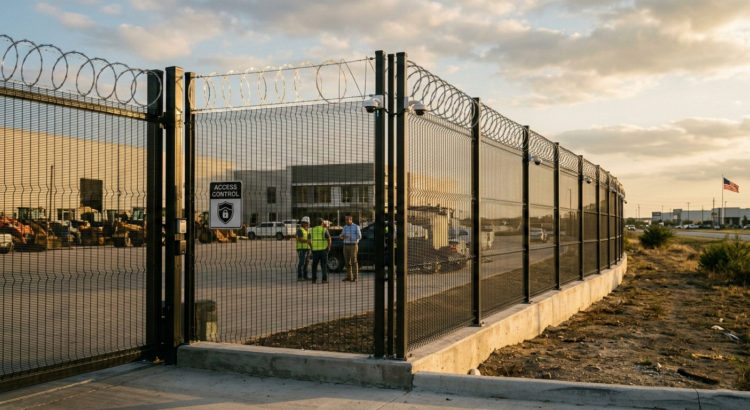
The landscape of commercial security in San Antonio has undergone a significant transformation as we move through 2026. While the San Antonio Police Department reported a promising 13% decrease in overall crime during the previous year, local business owners remain vigilant.
The “Alamo City” continues to grapple with property crime rates that sit above national medians, and as the city expands, the geography of risk shifts. For San Antonio’s industrial hubs, retail centers, and logistics sultantoto corridors, a perimeter fence is no longer just a boundary marker—it is a sophisticated, tech-integrated front line.
In 2026, prioritizing high-security fencing is less about reacting to a crisis and more about a strategic commitment to operational continuity and asset protection.
The Deterrence of Evolving Property Crimes
In 2026, the primary driver for high-security fencing in San Antonio is the shift in how property crimes are executed. While traditional “smash and grab” incidents have seen a slight decline due to better police response times, more organized theft targeting industrial equipment and high-value inventory is on the rise. High-security fencing acts as a psychological and physical hurdle that forces potential intruders to weigh the risk of a time-consuming breach against the likelihood of capture.
San Antonio’s unique position as a major logistics hub for South Texas means that local warehouses often store millions of dollars in transit goods. For these businesses, the “mere sight” of anti-climb mesh or reinforced steel palisade fencing serves as the first layer of a multi-tiered defense. By making the property an “unattractive” target, businesses effectively redirect criminal interest toward softer, less-protected perimeters.
Click the link to learn more: https://fenceanddeckprosofsouthtexas.com/commercial-fence-installation/
Integration with 2026 Smart Security Tech
Modern fencing in San Antonio has evolved into a “smart” infrastructure. In 2026, a fence is rarely just metal and wire; it is a mounting platform for a suite of autonomous technologies that allow for real-time monitoring.
- IoT Perimeter Sensors: Many San Antonio businesses now utilize vibration sensors along their fence lines that can distinguish between a gust of wind and a manual cutting attempt, sending instant alerts to mobile devices.
- AI-Driven Surveillance: High-security fences provide the necessary height and stability for AI cameras that use “human-detection” algorithms to ignore local wildlife while alerting security to loitering individuals.
- Automated Access Points: 2026 has seen a surge in “contactless” commercial gates integrated with RFID and biometric scanners, ensuring that the perimeter remains closed to everyone except verified personnel.
Mitigating Liability and Insurance Costs
Beyond the physical protection of goods, San Antonio businesses are prioritizing high-security fencing to manage the rising costs of commercial insurance. In the current 2026 market, insurance providers often offer lower premiums to properties that demonstrate a proactive “target hardening” approach.
- Risk Reduction: Robust fencing significantly lowers the risk of “attractive nuisance” lawsuits by preventing unauthorized individuals from entering hazardous areas like construction sites or machinery yards.
- Vandalism Prevention: With San Antonio seeing a focus on urban revitalization, businesses use high-security fencing to prevent graffiti and property defacement, which can be costly to remediate and harmful to brand reputation.
- Compliance: Certain industries, particularly those involved in government contracting or chemical storage near the Port of San Antonio, are now required by 2026 regulations to maintain specific grades of perimeter security to remain compliant.
Maintaining Curb Appeal without Compromising Safety
A common misconception in years past was that “high security” meant “high eyesore.” In 2026, San Antonio businesses are opting for ornamental iron and powder-coated welded mesh that provides the strength of a prison-grade barrier with the aesthetic of a professional corporate office.
- Aesthetic Versatility: Modern materials allow businesses in the Pearl District or Southtown to install anti-climb fences that blend seamlessly with contemporary Texas architecture.
- Material Longevity: With the intense San Antonio sun and humidity, businesses are prioritizing aluminum and galvanized steel with UV-resistant coatings that prevent rusting and fading over a 20-year lifecycle.
- Property Value: A well-installed, high-quality security system is viewed as a capital improvement that increases the overall resale and lease value of commercial real estate.
Protecting the Modern Workforce
In 2026, employee safety is a top-tier priority for San Antonio’s thriving tech and medical sectors. High-security fencing provides a “sterile zone” where employees can feel safe during late-shift changes or while walking to their vehicles in large parking lots.
- Controlled Pedestrian Flow: Fencing allows for designated entry and exit points, making it easier for security teams to monitor who is on-site at any given time.
- Safe Parking Environments: By securing employee parking lots with high-security barriers, businesses reduce the risk of vehicle theft and personal harassment, which are key factors in employee retention.
- Psychological Peace of Mind: A secure perimeter fosters a professional environment where staff can focus on their work without the distraction of potential external intrusions.
Securing Your Competitive Edge in San Antonio
In the competitive economic climate of 2026, a security breach is more than a loss of property—it is a disruption to the supply chain and a blow to customer trust. San Antonio businesses that prioritize high-security fencing are doing more than building a wall; they are building a resilient foundation for their future operations.
Investing in a robust perimeter today ensures that your business remains a stronghold of stability in an ever-changing urban landscape.